Showing posts with label Tips from a Young Writer. Show all posts

Thursday, July 24, 2014

Tips from a Young Writer - The Mid-Goal

Via Pinterest
Once upon a time, a long time ago, I had a series of blog entries called "Tips from a Young Writer" and they were actually quite popular ... if you compared them to the popularity of the other posts I was doing at the time.

So I've decided that I will revive them and post twelve more - one for each day of this party.

Today, for the Rowa, it's the Mid-goal.

Mid-goal? I hear some of you ask. What's that?

Well, it's a plotting device that I noticed somewhere in the writing of The Ankulen and I have used in almost every one of my books. And I searched books of writing advice, but the closest thing I've found anyone else talk about is the pre-climax (or something to that tune) which, though it's similar, has it's differences. A pre-climax is usually an echo of the official climax, the big difference being the fact that the hero fails.

The mid-goal is broader than that. And it's something that I have employed in all three of my published books, and in Infiltration. I've seen it in other books, too, so I know it's not just me. So what is it? Well, in the simplest terms possible, it's a pivotal event or a second goal for your characters to achieve that will completely shift the focus of the novel and on which the ultimate goal and climax of your book relies. Usually, it's something of a climax in it's own right, but it doesn't have to be that intense. Sometimes it's the goal advertised on the back of the book! In Sew, it's when Robert discovers Rosamond's true identity. In Take, it's when they arrive at the castle. In The Ankulen, it's when Jen gets her memories back.

What about in other books? Well, in The Phantom Tollbooth by Norton Juster, it's when Milo and his gang receive permission from the Mathemagician to rescue Rhyme and Reason. In Heartless by Anne Elizabeth Stengl, it's when the Dragon shows up. In The Fellowship of the Rings, it's when Frodo and the ring arrive at Rivendell.

A mid-goal can be either a positive event or a negative event, it can be subtle or overwhelming, but any way you slice it, it must shift the focus of the novel (even if its only slightly, as is the case of Sew) and it must present your characters with a choice. Do they continue with their quest? Or do they go home now? Does your hero continue to pursue the girl? Or do they part ways? Also, something must be achieved, whether by the hero, the villain, or the author, it doesn't matter, but some goal must be reached, a journey finished, or a secret discovered.

Does a book have to have a mid-goal? No. Many books (especially shorter books) keep the same theme, feel, and goal straight through. Can it have more than one mid-goal? Yes. Many books (especially longer books) have two or even three shifts in focus and goal.

So tell me about the mid-goals you have in your books. How about in books you've read?

Wednesday, January 2, 2013

Tips From a Young Writer - "On Thursdays we must eat cake!"

It's been forever since my last Tip. I have an excuse, though: My life has been crazy. Anyways, my  last two tips have been on World Building, and I think I'll cover the last part of world building today: Culture.

Culture is how your people live their lives and interact with one another. It governs their birth, their marriage, their death.

All in all, it's very important.

You can break Culture down into three basic parts: Religion, Politics, and Survival. However, these very often overlap or even combine. It can be used to govern their surroundings, or the surroundings may govern it. Culture is a very tricky thing.

I like to define the religion of my world first (Something I failed to do with Bookania ...) - I like to know how they view God. Now, they don't necessarily have to follow the true God, or even a God at all, or perhaps they "Have a form of godliness, but deny the power thereof." You must decide. If they don't follow the true God, is there someone who does who can bring him to them? Why don't they follow him?

If you are going to do a parallel to Chrisianity, then I sujest that you study the Bible for clues as to how to do that. For instance, in Bookania,God is called the Author because of the verse where Jesus is described as the Author and finisher of our faith (as well as the fact that it went really well with the name Bookania).  In the Rowa, he's called Yshew, because the Hebrew form of Jesus is Yeshua (Which can also be translated Joshua, incidently.) Another common thing I see is forms of the name Elohim. A study of Exodus, Leviticus and Numbers can give you ideas for worship traditions and festivals.

You'll also want to decide how you're going to handle Jesus. Will you do something similar to Aslan in Narnia, or will you simply use God. I've done it both ways. This is something I would pray over, and see how it would effect the plot. The Rowa doesn't have Jesus, only Yshew, but they do have salvation. The focus of Infiltration was the fact that the world is trying to infiltrate the church, and I concluded that to create a Jesus character would simply be confusing and distracting. In The New Division, however, I have Salv. The New Division is about how Jesus' death changed the division from Jew and Gentile to Believer and unbeliever, so having a Jesus character is important.

Once you have the religion mostly figured out, I would mess with survival. What do they have to survive and what do they need to survive. For instance, a people group in a desert would probably have a less advanced culture than someone who lived in a rich every-thing-you-need-is-provided valley. People in the desert have to devote more of their time to the gathering of food and water and the fending off of predators  and therefore don't have enough time to develop technologies and build long-lasting structures. The people in the valley would be in a highly contested-for location, and would have to build fortresses and the like to fend off enemies would would like that bit of real estate.

However, the opposite might be the case if someone in the desert people's history had managed to discover or invent something that would somehow make the desert fertile. Then they might have a more advanced culture as they strove to make all sorts of inventions and such to make the place as inhabital as possible. The people in the valley might not have any enemies to speak of, so they might just live in in thatch huts and eat berries all day long.

The last part is politics - how things play out among the uppity-ups. No society can exist without someone being in charge, so you must decide who is in charge. Will it be a king? A president? The oldest person in the community? What sort of laws do your people have to follow? Are there any strange ones? What are the punishments? Any of them cruel and unusual? Do you have a dystopia? This is something you must decide!

I, again, suggest a you read the aforementioned books of the Bible - especially if your people is Christian. I would also suggest a good look at the governments of the past. You can get a slew of ideas from there.

And that's all I have to say for now. If you have anything you would like to add, feel free to comment below. Also, if you have a topic you would like me to write about, feel to comment with a request for that as well.

Wednesday, September 26, 2012

Tips From a Young Writer - "The Leaves are Purple!"

Last week I talked about celestial changes. Today, I'm going to be a bit more down to earth, and talk about changes to that - the earth itself. Not what shape it is, but what it's made of and what grows on it.

Okay, so maybe (probably) your world is not called Earth, in fact it probably. isn't. But that's beside the point.

So, what are you going to do about the natural world of the world you built?

Of course, you could have things exactly the way they are on earth. That's the easy way. Follow all the rules of our own good-old terra cotta. Color the sky blue, the trees green, and use the good old official periodic table.

Easy as pie.

But you didn't come here to learn the easy way, did you? No, you didn't.

So how do you mess around with nature in your world. Well, let's break it down.

~The first thing to mess with are elements. You know, the periodic table. Are you going to use good old Helium, hydrogen, sulfur, Carbon, oxygen and all that good stuff? Or will you go back to the four elements: Fire, Water, Air and Earth? How about you make something up? Like ... everything's made of pillians! (don't ask me what a pillian is, I just typed what my fingers came up with.) Options are things to be explored!

~Once you've settled on what your basic elements are, the rest is easy. Now you need to determine what the water is like! Colors ... smell ... medicinal properties ... you can keep it the way it is now ... but hey, if we're changing things, we might as well change it all. Maybe water is safe to drink if it's blue, poisonous if it's green ... and turns you into a mermaid if it's purple!

You Can see inside this Egg


~ Color of Leaves. This is a fun one! Sure, we can stick with the color green ... but how better to make your characters go "WHERE ARE WE????!!!!" than for them to walk into a place where leaves are all a delicate shade of pink? The trick here is consistency. In our world, leaves are green because of (anyone? anyone?) chlorophyll, so, if you turn your leaves pink, you'll have to come up with a new chemical that turns them pink (maybe Pinkophyyl?).

~ Animal life. Oooh, this one's fun! Are you going to use normal horses, dogs, and cats ... or are you going to tap into mythology and pull out pegasi, jackalopes and chimeras? Or, perhaps, you want to come up with something completely different ... like a bird that looks like a flamingo, except it has cat ears! Even if you do use real and mythological beasts, that doesn't mean you have to keep the normal names! Call a horse an Equaq ... or a duck a Kakker ... have fun!

~ Climate. Is it always cold? Does it rain a lot? Do they live on the mountains? In the jungle? Does it snow? Is it a desert? Maybe it oobleks!

~ Appearance of intelligent life. You could use normal humans. Or ... you could do elves! Or FAIRIES! Do they have wings? What color is their hair/skin/eyes? How tall are they on average? An inch? A mile? How good is their vision? How smart are they on average?

Right now, that's all I can think of. If I think of more, I'll be sure to come back and add it.


Wednesday, September 12, 2012

Tips for a Young Writer - "There are two Moons in the Sky!"

One thing that both amuses and irritates me is when a fantasy or sci-fi author makes a "unique" world ... by adding a second moon ... or making it flat ... and then having this change have absolutely NO effect on how people live their lives!

Granted, many changes would be small - but there would be some changes! 

Please note that I am not against messing with the natural scheme of things. In my story documents and notebooks, I have:

1. A flat world (more than one, actually)
2. A world that exists within a book
3. A world with two moons (there may be more than one of these as well)
4. A world with two suns (whose paths are in ninety degree angles to each other)
5. A cylindrical world
6. And I have an inverted sphere world running around in my head as well ... though it hasn't been given a name.
7. I'm sure I have other interesting ideas floating around in my brain, but I'm not locating them at the moment.

So I consider myself quite the expert when it comes to this sort of thing.

(cough cough)

So, how would the list that I have listed above make for changes from the daily life we know and love? Let's examine.

1. A flat world.

People used to think that the world was flat, so investigating the changes this would cause is actually easy. Just research the reasons that Columbus and all of them thought that the world was round, and then inverse them. For instance on earth, shadows change angle and length depending on how far away you are from the equator. A flat world wouldn't do this (or, leastways, the angle change would be different). Also, our possession of a horizon is because the earth curves away from us. On a flat world, we could see for miles and miles and miles, without things disappearing off the edge of the world (unless of course, it falls off of the edge of the world) This would be especially noticeable at sea, where everything is flat, and you can see for miles anyways. Also, a flat world would probably not have a waxing/waning moon - unless it is truly being eaten by a dragon or something ...

2. A world in a book.

See above. I have some interesting little quirks that accompany those changes, but I'm not giving  them out here.

3. Two Moons

A two (or more) moon world seems to be the most prevalent among fantasy/sci-fi. The reason for this, I believe, is that it's an easy way to say "Hey, you just landed in a new world! Welcome to Dolllaraiia!" (I just typed random letters there - so don't get any ideas ... although ... hmm ... I do have that one world that needed a name .... hmmm ...) Anyways, I have noticed that when people toss in an extra moon, they often don't even ever mention it again. If they do, it's usually only to make mention of an extra (or double) full moon.

This is, again, an issue of researching what our moon does for us. For instance, our moon controls the tides. If your world has two (or more) moons and the tides function normally, I'm going to laugh. And laugh. And laugh. So please, if you're not willing to go through all the mathematics and stuff, don't even think about sending them to sea. (unless the sea is no larger than the  Mediterranean where the tides don't occur) Same goes for if you make your moon(s) larger or smaller than our own. Also, another change that is more cultural. We get our months from our moon. If there are two moons, how would the calendar be affected? Would one moon control, say, religious ceremonies, while the other was more agriculture? This is something you need to think about!


4. A world with two suns (whose paths are in ninety degree angles to each other)

My mother thought of this world, actually, though she hadn't thought through all the ramifacations. I have since decided that this is obviously a geocentric world, so I'll discuss that instead.

In a geocentric world, everything (moons, suns, planets and stars) would orbit the "Earth." In this sort of world, there would probably be no waxing or waning (unless, again, it was being eaten by a dragon) and, if your character hails from earth, they'd probably fall over on their face when they arrive, as they are used to the incredible speed at which the earth travels.

5. A cylindrical world

This would be a combination of a flat world (when you look north or south) and the round world (when you look east or west. Not that complicated, no? Of course, you would also have determine how the moon/stars/sun work for your world (which is something I truly only have a hazy idea about ... hmmm ... I need ideas) and stuff like that.

6. And I have an inverted sphere world running around in my head as well ... though it hasn't been given a name.

If you lived inside a hollow sphere, you could actually see farther than if you lived on a flat world because of the curvature bringing more things closer to you. Of course, you'd also have the issue of where the light comes from. Perhaps the moon and sun are actually one and the same - and it just gets brighter then dimmer as the day progresses. Perhaps stars are actually the tiny lights that the inhabitants of the opposite side of the sphere are using at night (campfires, lanterns, bonfires ... you name it!) Perhaps the light in the center repels things, which is why everything stays on the ground. Perhaps, at night, when the light is dimmer, things are lighter, because less light means less "gravity."


I love world building. I love reading about new and unusual worlds that others have built. However, even if you are breaking every rule that our world has, you still need to take human perception into concideration.

Yes, I think too hard.

Thoughts? I'd love to hear about all of ya'lls crazy world ideas!

Wednesday, August 29, 2012

Tips From a Young Writer - Beginning

Once upon a time ... (Any old Fairy Tale)

It was the best of times, it was the worst of times ... (Tale of Two Cities)

There once was a boy named Eustace Clarence Scrubb, and he almost deserved it ... (The Voyage of the Dawn Treader)

Every good story has to begin somewhere. It needs an opening line that peeks your interest and makes you want to read more. It needs an opening chapter that introduces you to the characters, but leaves you with questions as to why are they like that!!!???

It needs a good beginning.

The question is, however, how do you get a good beginning?

First off, start with the chapter. You can always change the opening sentence later to make it sound more grabbing, but if you write a brilliant first sentence, and then it completely does not fit the book, well, it'll just make you cry. Sure, try to make the sentence as grabbing as you can (for you, if you aren't pulled into what you're writing at the first sentence, you'll never finish. Trust me, you won't) but don't obsess over it, yet.

In writing your chapter you want to do three things:

1. Introduce your main character. This is just common sense. If you wait till chapter three to introduce the MC, your readers will be all ... "What ...? I thought Staci was the MC, who's this Jerald you're now so interested in." Of course you need to do more than just say, "This is a book about a guy named Jerald, he's going to be the MC of this book!" No! you need to let your readers fall in love with him! You don't have to tell every little thing about him at this point, but you do need to let your readers see his core personality, and his biggest quirks.

2. Introduce the Conflict. What is the story going to be about? What problems are your characters going to have to face? Let your reader know! You don't have to introduce the entire conflict, but enough so that your readers can start rooting for your characters.

3. Introduce secrets. Don't give away everything upfront. Let your readers know that your MC is a dragon rider, but you don't have to tell them all the riggamaroll they had to go through to get into that position, yet. Let your readers know that Julia has found a glowing egg in her backyard, but you don't have to tell them that there is a Mr. Fiery intent on hoarding all the glowing eggs in the universe, yet. You can tell your readers everything later. Right now, you're only trying to get their attention.

As for the first sentence, what do you need to look for in it?

1. It needs to fit the mood of the book. If you have a first sentence that invokes fear, your reader will be expecting a scary book. They'll then be severely disappointed when you're book is a happy-go-lucky book about a girl who collects flowers.

2. Make it pertain to either the conflict or the MC, preferably both. If it's about a character who disappears never to be mentioned again only a few pages later, or a conflict that is resolved before the page is over, your reader won't like it.

3. Make it either profound, exciting, or intriguing, preferably all three. Do an observation of your character's life philosophy, or maybe have him ask a question, or start it with some action - but make sure it fits your book!

Remember, the first line and first chapter will probably be what induces your reader to read the entire book. If you fail that, your book, no matter how good the rest of it is, will never be given a second glance.

Comments?

Wednesday, July 25, 2012

Tips From a Young Writer - Characters with Minds of Their Own

So you're writing along. You've got a great, and I mean GREAT plot planned. The hero is just about to swoop down and ...

Swoop down and ...

Um ... cue the hero! Where'd he go?

He's still arguing with his sidekick over how dangerous it is to swing on vines? But they were supposed to already have resolved that issue! Oh, great ...

Sometimes, your characters just don't want to cooperate with you. You want them to say one thing, they say another. You have a character planed to be outgoing, they turn out shy. Your character decides that the surprise party you're throwing him is a complete bore. What did you do wrong?

Nothing.

Yep. I said nothing. You did absolutely nothing wrong. In fact, you can congratulate yourself. You made a character with a mind of his or her own! Your character is no longer just words on paper and vague ideas ... but a person. And let me let you in on a little secret - those are the characters that your readers will most likely connect with and enjoy reading about.

Of course, you may have a few questions. How can a character have a mind of their own? Aren't they just people you made up? Yes, you have a point. You did make them up, and they are subject to your whims and crazy ideas. However, you have given them enough of a personality, or some quirk that make you feel as though you know your character. When this happens, you'll know what they'd do in a given situation ... that you may end up ruining your planned plot.

What happens if you had a plot planned, and your character is ruining it? You have three options.
 1. You can verbally force them to do it. Just write it in. Have no consideration for your character's feelings and completely ruin his uniqueness. The problem with this situation is that it will look forced to your readers.
 2. You can let them do what they want to do and see where this takes you. This option can be fun, but it can also be scary, too. It is not for control freaks!
 3. You can use setting/other characters/random giant birds out of nowhere to force your character to do it against his will. Just as long as his reaction to this is completely in character, and the method you use to force him into doing what you want him to do is not illogical.

If worse comes to worst, you can also try tweaking their personality, but that only works in the early stages of their development.

Now don't think that just because you have lost complete control over your character that it means that you have completely lost control. You still get to decide whether he wins or looses, and what sort of plot twists you throw at him. He just now has the ability to throw some plot twists at you!

Wednesday, July 18, 2012

Tips From a Young Writer - Editing.

Writing is fun. You get to control people into doing what you want them to do (sort of ... sometimes they don't quite agree with your schemes.) and sometimes build an entire world - just by tapping keys on your keyboard or scribbling in your notebook.

Soon you finally have finished your story. Your hero has married the heroine (or, at least, they are now engaged) the villain is dead (or at least in prison) and the world has been saved. Then you read it all over again, intending to revel in the brilliance that has spilled out of your fingers and onto your notebook/computer screen.

And it's horrid.

Did your villain really put on a pair of dirty Rocks? The proposal scene between hero and heroine is completely sappy and/or cheesy. You never did figure out what happened after the villain trapped the hero's younger sister on that island ... in fact, you completely forgot that your hero had had a sister!

Somehow, the words you see on the paper/computer screen is nothing like the words you remember spilling out of your fingers.

So what do you do? Do you crawl into bed, pull the blanket over your head, and decide that you will never write again, if all you can write is this horrid mess? Surely a good author wouldn't have made these horrid mistakes!

Let me let you in on a little secret. Every writer makes mistakes. Every book starts out horrid. Even the greatest books in the world have gone through the horrid stage called first draft. You're not alone. Welcome to the world of editing.

Editing? You ask. Did you just say editing? Yes I just said editing. And, I agree, editing is not fun. Editing means reading over all your mistakes and wracking your brain over how to fix them. Sometimes your attempts at fixing the mistakes will only make them worse.

So how do you go about this dreadful task called editing?

Well, the first step is to defamiliarize yourself with your story. You have just spent however long it took to write your book eating/drinking/breathing your story. It's part of you. You know it like the back of your hand, and knowing that it's flawed and horrid hurts. Trying to change things will just make it hurt more. If you don't defamiliarize yourself with it, you'll end up with a headache the size of the moon.

So how do you defamiliarize yourself with your story? It's simple. Put your story in a time capsule and don't touch it for at least one or two months. The longer and worse your story, the longer you need to ignore it. During this time, try to return to normal life. Hang out with your real friends, do puzzles, eat popcorn, learn to knit ... If you have to write, work on a completely different book. I have about thirty or so stories that I rotate working on, both on the computer and in notebooks. In fact, working on a different story is a good idea, as it will keep you mind off the story you're trying to ignore.

When you have sufficiently ignored your story, reread it. However, pretend that you didn't write it. Read it as if you have no idea what's going to happen. When you have finished, call up your inner editor. Everyone has one. Mine is named Sandra Elizabeth. With his or her help, read it again, but this time changing anything that didn't make sense ... such as changing those rocks that your villain is wearing back into socks ... if you haven't already.

There will be some scenes that you will have to completely rewrite. Don't fret! this is completely normal. Just take a deep breath and plunge in.

When you have rewritten and edited everything you can, find some people that will be completely honest with you, but with whom critique will not destroy your relationship of mutual trust. Have them read it and point out anything that did not make sense to them, and suggest ideas to make it better.

Now, that's all I have to say on that topic. If you have opinions, feel free to add them! If you have a request for me to write on, feel free to leave a comment with that!

Wednesday, July 11, 2012

Tips From a Young Writer - Changes

So you're writing along, you've got a good story line, your characters are being (mostly) cooperative ... only, you've decided that maybe the story would be better if you gave Sadie a dog instead of a cat ... or if Jack were a Jill instead ... or maybe you have a few too many characters and need to get rid of a few ... or maybe the story would sound better in first person ...

In other words ... you need to make a change or two.

This is a perfectly legal thing to do. Your book is your book, and you can do whatever you want to it. Although, I will warn you, some of your characters may resent some of your changes, especially if you decide to get rid of, say, a close friend, or a close sibling, their love interest ... or them. However, your story is yours to change, and they can't really do a thing about it.

However ... if you do decide to make a change, you'll need to go through and make sure that your story is consistent with the change. If you turned Jack into Jill, make sure you not only go through and make sure that you have changed the name every time you mentioned him, you also change all of the him's, he's and his's into her's, she's and hers's. If you change Sadie's cat into a dog, you need to make sure that you have her dog chase cats and cars, rather than sit in laps and purr. If you get rid of a character, you need to make sure that you remove all mentions of that character, and that another character takes care of everything that the character you got rid of was supposed to do. If you don't make sure that the change is made consistent, your readers WILL notice. Trust me, readers do that sort of thing.

If your change is big enough, you may want to start completely over. Get a new notebook, or a new computer document, and start over. This is probably the better option if you got rid of more than one or two character, changed the person, or made a major change to the main character, or added a new character who is needed to be there from the very beginning.

Now, if you have a character who is unhappy with the change, you'll have to tread carefully. They will probably be very resentful in your continued writing, and possibly uncooperative. Be nice to them, and see what you can do about giving them something to make up for the inconvenience you made them.

Now, that's all I have to say on that topic. You can make changes, big changes, but make sure you keep them consistent. If you have any opinions on this topic, feel free to comment, and if you have a request for me to write on, you can leave a comment with that request.

Also!!!

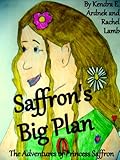
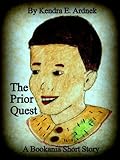
"Saffron's Big Plan" and "The Prior Quest" are FREE today ONLY!!!


Wednesday, June 27, 2012

Tips From a Young Writer - Distractions

So you're writing along. You've got a good enough plot, your characters are being at least somewhat cooperative ... thing is ... you're starting to get a tad bit bored. Maybe you're at a slow spot, maybe you're just not quite sure how to get your hero out of the cage so that he can get the heroine off of the dangerous cliff. Whatever the case, suddenly your little brother or sister's Barney video is strangely interesting ...

Or ... wait, your room is messy, you'd better go clean it up. And - Oh! - it's such a beautiful day outside, you've just got to go for a nice walk in the woods. Or maybe, hmmmm..... hey, what's for lunch?

Anyways, you keep getting distracted. No matter how hard you try, or at least pretend to try to keep yourself interested in what you're writing, suddenly, you've got a whole plate of more important things to do.

Well, you're never going to get anything written if you keep letting yourself get distracted. So, how do you avoid distractions?

First, remove distractions before they can occur. If you can, hide in your bedroom where you can't see the TV playing Barney, which, if it isn't being interesting, it's being very annoying. Once in your room, make sure you keep it clean. If you're being distracted by fresh air, take your writing outside if possible. I do a lot of writing outside. And make sure you're not hungry while writing. Writing while hungry makes your characters hungry, and that makes you all grumpy and nothing productive can be written.

Second, try to rekindle your interest in your book. It's probable that your interest in everything else stems from your lack of interest in the story itself. Call up your characters on the phone, invite them to a sleepover and talk the book over with them. Evaluate where the book has been, and see if you can come up with where to take it. Don't force it. If an author forces a book, the readers will notice. They'll also notice a slow spot. You want things to be natural, true, but you also want things to happen.

If you're really distracted, you may want to talk your distraction with your family and friends, if they are the sort of family and friends that are interested in your writing. Perhaps they will have an idea or three to get it moving again. They will, at least, be able to tell you to get back to writing whenever they catch you watching Barney.

And that's all I have to say on that topic. If you have any opinions on it, feel free to comment. And if you have any requests for me to write on, feel free to leave a comment with them as well!

Wednesday, June 13, 2012

Tips From a Young Writer - Conversation

If you write a work of fiction, it's very likely that you'll have conversation. Some stories use it more than others. It's important to do it right, or it may destroy the story.

First, you have to make sure that conversation sounds natural. It has to be written in such a way that, if read aloud, it sounds like people are actually talking. A good test for that is to actually read it aloud. Also, get someone else to read it aloud. You happen to know exactly how they were supposed to talk, a second reader doesn't.

Here are a few tips that I've found useful for making natural sounding conversation:

Use contractions. Most people like to talk fast. They do not like to slow down to say each word individually. Unless it is a quirk for a particular character to say every word distinctly, use contractions.

Elliptical sentences. When you talk, much is understood. People don't like to be repetitious when they talk. When asked, "Where's the gum?" they won't answer "The gum is on the dresser," but simply, "on the dresser."

Have a variety. No two people have the same style of talking. Some people enunciate every word carefully and oversay everything. Other peeps say things fast as can, leave words out and don't hesitate t'slam words t'gether. Many people have a catchphrase or, like, says a word, like, over and, like, over, you know? If your character has an accent, some words will be spelled differently, such as Mom would be Mum with a British accent, and German speakers pronounce 'w' as 'v'.

Second, don't be afraid of the word said. He said this and she said that and they said something else at the same time. It might get monotonous to write it over and over. It even gets monotonous to read over and over. You may find yourself wanting to use another word, such as 'asked' or 'answered,' or 'retorted' or 'demanded' or maybe even 'yelled.' Now, there are times when such words are good or even necessary, but often said is just the best word for it.

Also, you can add to the word said. Perhaps he said something quickly, or bashfully, or slowly, or maybe he looked at his hands while he said it. Adding action to speech is a great idea.

Sometimes you can leave a tag off altogether. However, be careful with this, because it can confuse your readers as to who's talking. You might even get confused, and a scene such as the following may result:


“Oh, right.”
“Um … which of us is saying what?”
“I think our author had better figure that out.”
“We have an author?”
“Let’s just end this scene before it gets any worse.”
“I agree.”

This is a real scene that I have written when I was tired, had writer's block, and had forgotten to use tags to indicate who was saying what. It comes from my book Infiltration. Please heed this as a warning, and, unless you want your characters finding out about you, use speech tags. Also, use them for your readers sake. The last thing you want is a reader who is confused as to who's speaking.

You can also simply put an action with the speech such as: Julia smiled. "That would be a great idea!" Just make sure that there is a period after the action and not a comma.

Of course, the best way to learn how real conversation works is to actually listen to it. I'm not asking you to eavesdrop, but pay attention to when you're talking to people and when people are talking to you.

Now, that's all I have to say on this topic. If you have any comments or tips on it, feel free to comment and give your tip. If you have a request for me to write on, feel free to ask me to write on it!

Wednesday, May 30, 2012

Tips From a Young Writer - Criticism

When you write, you put a little of yourself into it. No matter how detached you may think yourself from a story, you poured a lot of precious time and thought into it, and you're not going to get that time back, or get to think those thoughts differently. As a result, you'd like for everyone who reads the book to like it, so as to make your wasted time worthwhile.

Sadly, such is not the case. No one will has or ever will write a book that is liked by everyone. Not even the Bible is liked by everyone - so what makes you think you can outdo God!

If you write a book and put it up for the general public to read, someone who reads it will not like it, I can guarantee it. It's just a fact of a writer's life. However, there are three solutions to this problem.

First solution is to not let anyone read your book. Lock it into a box, or password protect the document. It's a sad thing, but there are many potential authors who will never be published because they are scared that someone will not like their book. I know a few.

Your second solution is to try to write a book that everyone will like. The problem is, there is nothing that everyone likes. You couldn't even pick a genre, because there is no genre that everyone likes. Therefore this solution flies completely out the window and crumbles to dust on the sidewalk.

The solution that works is to accept it. It's as simple as that. Accept that other people have opinions, and that their opinions are often radically different than others. Trust me, I have received some not-so-great reviews. It's not fun. However, there's nothing I can do about it ... other than lock all my work away and not let anyone read it. I've also written some bad reviews, so I know that, if I can dish it, I ought to be able to take it as well.

But don't just toss all the bad reviews out the window! Sometimes your readers will point out valuable information, or point out some mistakes or areas you need to work on as a writer. If your reader says that you need to work on your spelling, work on your spelling. If he says that your characters are flat, work on character development.

So, don't be deterred from writing just because someone might not like your work. Other people probably will! (Unless you have truly bad writing. In that case, get lessons before you start publishing.) Write, write and write some more. And have fun. That's the most important part.

Now that's all I have to say on that topic. If you have a request for me to write on, leave a comment. I will try to form enough of an opinion to write on that, I promise!

Wednesday, May 23, 2012

Tips From a Young Writer - Voice

When you write a book, you have an important decision to make right up front - what voice will you write it in? The voice is very important part of the book, and it can make or break your story.

What do I mean by voice? Voice is the style of how you write it. You can break it into three main parts: Mood, person, and tense. There are other factors, too, but those are the three main ones.

Mood is the emotion the book is supposed to carry. Some books have a cheerful mood. If your book thus, you would use lots of happy words and there would probably be some jokes. Descriptions would be full of color and sunshine. Other books have a gloomy mood. These books use sad words, and sad things happen. Descriptions tend to be grayish dark. Some have a hopeful mood, where there's grayish descriptions but there's a ray of sunshine piercing this darkness.

Person is what pronoun you use to describe your main character. Most books are written in third person. When a book is written in third person, your main character is him, or her. You refer to them by name. You are not limited to your main character, and can often get into everyone's head - or no one's, if you'd prefer.

The second most popular person is first person. If you write in first person, you refer to the main character as "I." This is the tense you write in if you're doing a "memoir" or a "diary/journal." Often, it is treated the same as third, except that you only get into one character's head. You have to make sure that your readers can figure out what the main character's name is (unless you purposely don't want your character to have a name ... I've read books like that) within the first chapter or so, or your reader will have trouble associating the character with the name. And I ask you, no, I beg you, do not, DO NOT change the P.O.V without warning. I have read books where, for the most part it is written in the P.O.V. of one character, except for a chapter or two that, without warning, are told in the P.O.V. of another. This is confusing, and it may take your reader a while before they realize that you have switched, especially the first time. If it is done consistently, and it is well marked that you have switched, and they have different writing styles and personalities, it can be done, but don't suddenly start doing it halfway through the book. You can also use the pronoun "We" if you're telling it from the point of view of two or more people. "The Magic School Bus" book series is a good example of that.

Second person is not used very much at all, for the main character would be "you" and this "you" would be your reader. It is mostly for instruction manuals and Choose Your Own Adventure Books. My mother says she has only read one book that was successfully written in second person that was not one of those.

The third part is Tense. There are three main tenses: past, present, and future. Most books are written in past tense. It tells events that have already happened. "Molly jumped over the crack in the sidewalk and went inside her house" for example. A few books are written present tense. It tells events that are happening. "Molly jumps over the crack in the sidewalk and goes inside her house." The future tense you will probably never see. My mom says she has only read one in it - a futuristic sci-fi -  and that it was a very strange book. "Molly will jump over the crack in the sidewalk and will go inside her house."

How do you find the proper voice for your book? Experiment. Try writing it one way, and if that doesn't work, try another. I have some stories that I have tried to write in first person, but have ended up writing in third, other stories have been the other way around. Some authors write some methods better than they write others. My sister can't write first person, I can't write anything too extremely gloomy - a joke will always slip in. Find the style that works best for you and for your book.

That's all I have to say on that topic. If you have any requests for me to write about, leave a comment, and I'll see what I can do.

Wednesday, May 16, 2012

Tips From a Young Writer - Writer's Tics

Writer's block may be the worst thing that can happen to an author, but a writer's tic is pretty bad, too. Writer's block may merely delay the book from getting to your reader's hands - a writer's tic may make them not want to read the book.

What is a writer's tic? A tic is defined as " A habitual spasmodic muscular movement or contraction, usually of the face or extremities," by the dictionary. Does this mean that a writer's tic is a spasmodic twitch that makes you type or write the wrong thing? Actually, no. A writer's tic is a word or phrase that an author depends on too much.

For instance, my writer's tic used to be "suddenly." I would be writing along, and suddenly, I would see that word there, and suddenly I would have to edit it out, and suddenly .... you get the idea. I have since figured out how to avoid that word, however, the word "however" has now been given me troubles, and, indeed, the word "indeed" has been, too.

I don't say that you can't use the words, but the human brain is a lover of variety, and a word repeated over and over and over will bore your readers, and quite possibly irritate them. And there's nothing worse than an irritated reader. If you want your reader to keep reading your book, you can't bore them - for they might not pick the book back up once they put it down - or irritate them - for they will purposely put the book down, and never pick it back up. The words themselves may be great words, and may add plenty of interest should they be used in the correct amount, but if you put it in too much, it looses its punch.

So, what do you do when you find you have a writer's tic? How do you identify a writer's tic?

If you suspect you have a problem word, and you are writing on the computer, there's a simple test. If you are writing on paper, it's a  tad bit trickier. If you're on the computer, first, determine how many words there are total. Then press CTRL+F. This will pull up a neat little find box. Type in the word you think may be giving you trouble. It may be a good idea if you tell it to "look for whole word only" if that is possible. Then, compare the number of times you use that word to how many words there are in the document total. If it is used more than once every hundred words - you probably have a writer's tic. It really depends on the word. The stronger the word, the less you need to use it.

Note: your Main character's name, pronouns, and, and some other various words are rarely writer's tics. If you use them a lot, that's not always that big of a deal.

If you are writing on paper, you will have to count all the words manually. No big deal.

So, what do you do when you realize there is a problem? Well, first of all, make sure you watch out for that word. If you catch yourself using it, ask yourself, "Is this the best word for this place?" and "Is this the best place for this word?" If you answer yes to both questions, you can use it. If you answer no to one and yes to the other, it's up to you, but you might prefer to not use it. If you answer no to both, don't use it. If you have used that word already in that paragraph, you may want to pick another word.

Second, you will want to go back through what you have already written, and ask yourself the same two questions for every time you used the word before. Sometimes you will want to change the word to another, sometimes you will want to delete it completely, and other times you can just leave it alone.

That's all I have to say on that topic. If you have any requests for me to write on, please leave them in a comment!

Wednesday, May 9, 2012

Tips from a Young Writer - Writer's Block

The bane of every writers existence is a horrid creature that crawls up the backs of their chairs and sucks their inspiration dry. I encounter them quite often. It's called Writer's Block.

Most people have encountered writers block at some time or another. If they haven't they probably have never had to write something, either. Writer's block can happen at any time - whether it's trying to keep you from coming up with the story at all, or merely keeping you from successfully tying up all your loose ends.

It's a horrid thing, especially if you are getting writer's block and you have a deadline by which you must have what you're writing written by.

Here are some tips that I have discovered for combating writer's block.

1. Go back and read over my list of Inspiration for tips to re-inspire you.

2. Leave the story alone and work on something else. Even if you do have a time constraint, it may be beneficial to leave the story alone for a while and look at something else. Your brain can only be productive on a single topic for so long, and making it think harder on what it's already fizzled on will only make it fizzle more.

3. Take a walk OUTSIDE. It's amazing what fresh air does for your creativity. This works best in the country, but I am aware that this is not possible for everyone. Do it barefooted if possible. I always think best barefooted.

4. Sleep on it. If you've been thinking on it enough, you might dream about it. Also, sleep helps your brain sort facts.

5. Reread what you've already written. Look for clues to tell you what to write next. Watch for a loose end that can tie it all together, something that someone said that could be used to give your hero a clue to where the princess is hidden ... anything. Be careful that you don't fall into the trap of "this is all horrible, I may as well scrap it all now." What you are writing is probably still a rough draft, and the definition of a rough draft is that it still needs a LOT of work.

6. Read something else. Let your brain absorb something rather than force something out.

7. Ask your baby sister. I'm still serious on this one! Baby sisters come up with the funniest ideas.

Now, that's all I have to write on this. If you have a suggestion or request for me to write on, feel free to leave a comment!

Wednesday, May 2, 2012

Tips From a Young Writer - Personalities

I have gotten a request to write on personality types. This happens to be a topic I quite enjoy. In fact I have a three inch thick book that I stashed on my personal bookshelf (it used to live on my parent's) and I read it somewhat regularly.

Okay, you're asking, what does personality typing have to do with writing books? Plenty. I have found personality typing to be invaluable when it comes to keeping my characters in-character. You see, believe it or not, most people match up to what their personality type says they should be like. Therefore, if something holds true for people, how should it not also hold true for characters as well?

There are two types of personality typing that I use. One is the DISC method and the other is the Myers Briggs method. The first has only four main personalities, whereas the other has sixteen. The DISC method is much older, under the old names for the four personalities: Choleric is now D, Sanguine is now I, Phlegmatic is now S, and Melancholy is now C. Myers Briggs personalities are combinations of letters: E or I for Extrovert or Introvert, S or N for Sensing (Concrete thinkers) or iNtuitive (Abstract thinkers), F or T for Feeling or Thinking, and J or P for Judging (Schedulers) or Perceiving (go-with-the-flowers)

I highly suggest you get a book about them. The book I have on my shelf is Please Understand Me II: Temperament, Character, Intelligence. It uses the Myers Briggs method. It tries to convince us that Myers Briggs is merely an expansion of the other, but on that I disagree. You see, I had typed myself to be an I in the DISC method, and in the Myers Briggs, I typed myself to be an ENFP. However, according to this book, ENFP falls under the D category. Therefore, I use DISC for the most part separate from Myers Briggs.

When I develop characters, I almost always try to type them as quickly as possible. For instance, I found it great help in writing Sew, It's a Quest to know that Robin was an I-ENFP (like me ... although She is actually borderline ESFP. [and she's much better than me with a sword]), that Robert was a C-INTJ (like my mom. She was great help with deciding what he would be most likely to do in any given situation) Rosamond was a S-INFJ ... and so on.

Now, you don't have to make your character cookie cutter to the description of the personality type you decide the character to be. In fact, don't make him cookie cutter. No live person is cookie cutter, so why should your character be? For instance, Robin is quite a bit more of a hothead than most I's or ENFP's, however, she's still an I-ENFP, just a hotheaded I-ENFP.

So, get yourself a good book on personality typing - it doesn't have to be the one I use, it just has to be a good one. Read it, get to know it. You'll find that your characters have much more depth after doing so.

Now, that's all I have to say on this topic. Leave a review if you have a request, and I might just write it!

Wednesday, April 25, 2012

Tips from a Young Writer - Descriptions

Thick mists hung heavily between the trees. A few beams from the moon struggled to pierce it. Odd shadows and shapes formed themselves here and there, inviting fear from any wayfarer who stumbled into these woods. Punctuating these shapes were the hootings of an owl, the howl of a lone wolf, and the sctritch and scratch of the small forest creatures.

......

The air was crisp with the smell of wildflowers and pine needles. Rays of sunshine filtered down through the trees, creating an ethereal effect. A deer is sighted for but a moment, and song birds sing sweetly in the trees. A squirrel scampers across the path carrying an acorn.

......

Would you believe me if I told you that I described the same forest both times? I did. Yet, the first time, the forest was scary, the second time, a place you would like to visit. What made the difference? It was my choice of words. I used words that conjured up fearful images the first time - who doesn't get scared when we talk about mists and shadows, wolves and owls? - and the second time I used cheerful words - crisp, wildflowers, sing, sunshine, ethereal.

True, the first time it was the forest at night, and the second during the day, but that was only because night lends itself to fear better.

Description helps set the mood of your book, therefore, it's important to know how do do it.

First of all, determine the mood of your book generally, and the scene specifically. If it's a cheerful scene, make your descriptions cheerful, if it's a scary scene, use scarier words. Second, use descriptive words. Now, that seems simple enough and straightforward, but it's a lot harder than you may think. It's easy just to say that the sky had storm clouds, but what about this: Angry clouds hung over us, threatening to loose their rain at any moment. Third, avoid being verbs. Use action verbs as much as possible. Action verbs? For description? Yes! Action verbs for description! You see, when you use the being verbs, the descriptions just sit there. When you use an action verb - then your descriptions pop into life - The yellow sun pops into life when you say that the smiling sun caressed us with his golden rays, doesn't it?

Of course, you're going to have to describe your characters as well as the setting. This is slightly trickier than describing setting, especially when you describe the main character. You see, you usually tell the story from the point of view of your main character - and how many people go about describing themselves! You can describe most of your other characters outright, but your main character, you have to be sly with. You can have them brush a curl of their brown hair out of their green eyes, or you could have them stand on tiptoe and wish they were taller. You can have them compare themselves to a family member that they think is more beautiful than they. Have another character mention what your character looks like.

However, do not over describe your character, or anything else. And don't describe any part of the scenery that is not absolutely necessarily to the plot or to the mood. If there isn't a secret message on the rug, you don't have to describe it to ever minute detail. That would just bore your readers and disappoint them when they realize that the rug has no significance to the story whatsoever. And, also, give your readers the benefit of the doubt - in other words, you can take for granted that a reader knows what an acorn looks like, or that they can remember what something looks like once you have described it.

Now, that's all I have to say on this subject. If you have any requests for me to write on, leave a comment with it, and I will try to write something on it.

Wednesday, April 18, 2012

Tips from a Young Writer - Setting

The setting of your book tells a lot about your book. If your setting is a land filled with dragons, expect to see a dragon or two (hundred). If your setting is the arctic, expect polar bears and ice. If your setting is a futuristic world with amazing technology, expect robots and space travel.

Setting affects your characters. For instance, a young girl in the first setting probably wears something typical of the fantasy genre - a long dress with a corset or something. If she belonged to the arctic, she probably wears a parka. In a futuristic world, she would wear something hightech - maybe a watch capable of displaying a computer on the wall?

Setting is very important, so its something you need to know. Define your setting well before you start writing.

How do you do that? First, state the premise of your book - to take from two weeks ago, a girl finds mysterious glowing egg. Obviously, magic will be involved. As we have already discovered that Mr. Fiery decided to take over the universe, this is obviously set in a place that has interplanetary connections. If Julia is disbelieved because of her overactive imagination, it may also be a place where magic doesn't happen very much.

Therefore, Julia's story is probably set in the future, or perhaps in a parallel universe, but one with magic.

That's the general setting. Of course there is also the minor settings - and unless this story takes place in a single room, there's going to be plenty of these. For instance, there's Julia's backyard. What does it look like? Does it look like any other back yard? Are there trees? Flowers? A pool? A swings-set? Where in her backyard will she find the egg. It's not vital that you know every detail about her back-yard, but give enough that your reader can visualize it.

Of course, then there's in the house itself, Julia's school, Mr. Fiery's HQ ... basically, anywhere Julia goes is a minor setting. You don't have to describe every detail of every minor setting, but give enough so that your reader doesn't get lost and so that he or she has a clear, well-defined mental image of the setting. To many details may make your reader want to put the book down. You can tell them there's a rug on the floor, but unless the pattern is important to your book, you don't have to describe the pattern. Some readers like lots of detail, but I, for one, do not, and I know for a fact that I am not the only one that doesn't.

So, describe your setting, but don't annoy your reader with it. 

Of course, setting can also be used to set a mood. For instance, if you describe a place as being sunshiney and pleasant, you probably have a cheerful mood to your book. If, however, the clouds are low and foreboding, and the wind chilly and biting, you probably have a darker tone to your book.

Wednesday, April 11, 2012

Tips From a Young Writer - Villains

Villains are a special type of character, and often the most delicate to write. They tend to distrust people, especially their authors, with their secrets, which are often quite crucial to the understanding of the way they work. You have to make sure their evil doesn't corrupt you as you develop their characters.

To make matters worse, there are actually three types of villains. There is the true villain, the antagonizer, and the circumstances. The true villain is what most people think of when they say the word villain. He or she is evil through and through - like Sauron from the Lord of the Rings, or the White Witch from Narnia. What they do, they do on purpose. They are powergrabbing, stingy and selfish. The only thing you can do with them is kill them (or at least dump them in the nearest black hole.) Once in a while you can find out a secret about them that can turn them good in the end, but this is rare.

The second type is the antagonizer. This would be someone like Eustace from Narnia, or simply a bully at school, or an annoying younger brother. They are someone who stands in the way of the Hero's story, but they probably won't be too hard to get around. You don't have to conquer them, as they are usually redeemable, or, at least, they are not the main thrust of the book, merely a hurdle to jump over.

And then there's the circumstances. Circumstances are just that: circumstances. In Robinson Crusoe, sure, there's cannibals and pirates and such, but they are all merely a part of what Robinson has to overcome. The main thing he must fight is his circumstances. He must learn to tame the goats, milk them, build himself a shelter ... basically he has to learn to survive no matter what his circumstances throw at him. Sometimes the villain is the character themselves - a bad personality trait they must overcome, like lying or fear.

Some books have all three villains! For instance, take Julia's story that I told you about last week. In that, we can say that Mr. Fiery is the True Villain. He wants universe domination using those mysterious eggs. But, perhaps, Julia also has some bullies at school, or an older sister with whom she doesn't see quite eye to eye. Perhaps, also, Julia needs to overcome something in herself, such as her overactive imagination.

Of course, when it comes down to the villain, make sure you develop him. He or she is one of the most important parts of the book. If you don't have a well-developed villain, your story will fall flat. Make sure you know why your villain is evil, what he wants more than anything (beyond world domination) and his destroying secret.

Some people use their villain for comic relief - the bumbling villain appears to be getting quite popular. Now, while they may be okay for children's books, where you need to lighten the whole villain stuff anyways, in books for older people, they just don't cut it. There are a few cases where you can get away with it, but most older people want the Hero to succeed by the Hero's skill, rather than the Villain's lack thereof. Therefore, I shy away from the comic villain.

But make sure your character is able to overcome the villain realistically! Readers will roll their eyes if your villain is overcome by a freak power that the hero acquires not five seconds before the hero overcomes the villain. Also, they will be sorely disappointed  if the villain wins. Yes, I know you want to be unexpected ... but don't do it like that, please! Be unexpected in how your hero prevails (by revealing your villain's secret, not by a new, freak power) not in having the villain prevail.

Now, that's all I have to say on this subject. If you have any requests for me to write on, please leave a comment. If I have enough of an opinion, I just might write on it!

Wednesday, April 4, 2012

Tips From a Young Writer - Characters

One of the most important parts of a book are the characters. If you don't have a character your reader will fall in love with, they will put the book down and not touch it again.

So, one of the biggest challenges an author has is how to create a character that will keep the reader from putting the book down. Now, that's a pretty tall order. You've got to create an entire person and effectively bring the character to life through words.

How are you supposed to do this????

The first thing you have to do is define your character. Give your character a name, a brief backstory, a basic appearance, and a core personality. For example, I'm going to create a character named Julia. I think she is a little girl of ten or twelve who discovers a strange egg in her backyard ... which glows red. As for basic appearance, I think she's of average height, has blue-green eyes, ginger hair, and freckles. Lots of freckles. As for core personality, she's sweet, and curious, has an overactive imagination, and loves big words that she does't know what the mean exactly but she uses them anyways.

Now that I have a basic character (and the start of my story, girl finds egg in backyard) I need to go in depth. If I want to, I can give Julia a middle and last name ... how about Anna and Roma. Julia Anna Roma. That has a nice ring to it. I can go in depth with her backstory. Because she has an overactive imagination, no one believes her when she finds the egg. Also, due to all those freckles, I would deem it a safe guess that she spends a lot of time outside. A great idea is to take Julia and interview her. Ask her a list of questions and see how she answers. It doesn't really matter what sort of questions you ask her, and it doesn't matter how random they are. Indeed, sometimes the random questions can give you the best insights on your character. For instance, I could ask Julia what sort of shoes she wears, and when she tells me she wears a pair of hand-me-down shoes that were originally bought for her cousin 10 years older, and that they're severely beat up, and that she has the shoelaces decorated with beads and glitter from school, I learn that she comes from a somewhat poor family and that she's very creative. Don't forget to give her flaws (readers hate flawless characters) but make sure the flaws make sense for her character.

And now for the really fun part. Bringing Julia to life through words. There are three ways, which I call the three A's: Action, Appearance, and Articulation. Action is what she does. If she tosses her bookbag on the couch as she dashes outside, it shows a definitely different personality than if she placed her bookbag carefully on the couch before she calmly went outside. Appearance is what she looks like. Having unkempt hair and a shirt covered in glitterglue shows a very different personality than well kept hair, and a clean shirt. Articulation is what she says. "Hurry, Hurry, there's a giant in the yard!" Julia exclaimed, interrupting her mother on the phone, shows a very different personality than, Julia waited for her mother to get off the phone before she calmly informed her mother, "I think I saw a giant in the yard."

Of course ... Julia's just the main character! Julia also has a mother, a father, older and younger siblings, friends (both real and imaginary) and of course, the all important whatever-that's-in-the-egg. Guess what? You've got to define their characters, too. Just because they aren't the main character doesn't mean that you don't have to know pretty much everything about them too! A well defined supporting cast is just as important as a well defined main character.

And what if there's a villain who wants the egg so he can take over the universe! You've got to define him too!!!! Give him backstory (why he became a villain) and physical characteristics. Mr. Fiery may have once been a little boy in a situation (overactive imagination, poor family ...) much like Julia, but then he discovered the egg, and it corrupted him, and now he's collecting all of the eggs like it in the universe in hopes that they'll give him great power (which they do).

And soon, as you come up with your characters, you'll find you have a great story.

Wednesday, March 28, 2012

Tips From a Young Writer - Inspiration

Since, last week, I told you you can't steal someone else's story, I'm going to talk about other places you can get a story. Now, I can't tell you that these work 100% of the time, and I can't tell you that they are all the ways you can get story ideas, because neither is true. These are just some methods that have worked for me.

1. Books you've read.
Now you're looking at me like I'm crazy. Last week I told you that you can't take ideas from books you've read ... and now I'm telling you that ...
Relax.
You CAN get ideas from books you've read. You see "There is nothing new under the sun." Suppose you're reading a book about people who ride eagles, and you really like the idea, and you want to write a book about people who ride eagles. Now, there are hundreds and hundreds of books about people who ride eagles, so if you write a book about people who ride eagles, it would not be plagiarism, AS LONG AS you do not copy the book you like almost word for word verbatim. Come up with your own plot, characters, setting, and all that. The genius of a good writer is not writing something new, it's writing something old a new way.

2. Dreams
I'm not talking about daydreams here (although daydreams can be good story ideas), I'm talking about good-old, bonafied, when you're having RPM sleep dreams. Now, not all dreams are book worthy. In fact, of all the dreams I've had in my 17 years of life, I've only come up with one book out of my dreams, and even there, the book has only two things in common with the dream.
My sister, V. Kathie, on the other hand, often has book-worthy dreams, but even then, she has to do major editing to them to give them plots and such.
So, getting story ideas out of dreams all depends on the person who's dreaming the dream.

3. Playacting
Gather some friends around and assign each of you a name and personality (just make sure they are okay with the name and personality. In fact, let them choose their name and personality), and let the story roll. I do this a LOT, mostly with my "play-partner," younger cousin. We come up with some of the wildest stories together. Sometimes I also do this with V. and sometimes with some other friends of ours.
Now, just as with dreams, a story you playact doesn't always make good book material. And you'll have to get your friends' permissions before you publish the story, but it's still a great place for ideas, nevertheless.

4. Asking little kids questions.
I'm honest here. One day, my brain had gone SPLAT. I was trying to figure out how to kidnap this one character, but I could not come up with a way.
So I turn to my not-yet-two little sister. "Little Miss FoI, (Full of It)" I said, "how should I kidnap this character?"
She turned to me, and with all solemnity, answered, "Abbida," and after a few seconds, added, "Abbido."
I blinked, and realized, that a "big doll," and a "big dog," were the perfect plan for kidnapping the character.
Little kids have the strangest ideas, and they are still untainted by everything they've read, so it's usually quite original!

5. Random thoughts.
Your brain can be quite creative at times, you just have to listen to it. That's how I came up with Robin, the MC of Sew, It's a Quest. I was folding laundry, and this random idea occurred to me. What if there was a girl who, due to a Fairy Godmother mistake, was the best swordsman in the world - without trying really! The second I came up with this idea, I had a name and mental image of her. She was Robin, and she had brown hair, brown eyes and an olive complexion. I also knew that she was on a mission to find her Fairy Godmother to get this gift straightened out. I also knew that she belonged to my Sleeping Beauty retelling (for which at the time had no plot) and that she was the missing element it needed. Robert didn't present himself to my mind for weeks after!
So have an open mind, and watch out for your brain to throw weird stuff like that at you.

6. History, Science, and Math.
Yep, you heard me right, school is a great place to find ideas for your books. In fact, it's one of the best places. Nothing, you see, is copyrighted in the three subjects mentioned above, and it's all free for the taking. Not only that, if your book is educational as well as entertaining, it will have a cutting edge over other books. A good book that tells a great story can be wow!, but a good book that tells a great story, and teaches you algebra! That's WOW!!!! PLUS, you'll have teachers and parents RECOMMENDING your book.

7. Phone Book.
This is actually a good place if you're stuck on a name. There are lots of great names, first and last, in the phone book. Another place you can look for names is a baby name book (I actually own two, and can easily get my hands on a third!). A baby name book also tells meanings and possible nicknames, so you can pick out the EXACT name you need for a particular character.

8. Art and photographs.
Every picture has a story, and they say that a picture is worth a thousand words, so can you come up with the thousand words that form the story of say, a painting of a mother reading a book to her daughter, or perhaps a photograph of slaves picking cotton in South Carolina. If you're looking for an idea, you can also start doodling a picture. Perhaps the picture that comes out will give you the best idea in the world! You don't have to be a great artist, and no one ever has to see what you drew. Just draw, and see what happens.

9. Your Life.
Oh, don't tell me you have a boring life. I'm sure you have some glimmers of excitement and humor now and again! I use events from my own life all the time. For example, in the sequel to Sew, It's a Quest, there will be a scene based on something that happened at our Family Thanksgiving a few years ago. I can't tell you what it is, but if you want to watch out for it, it will involve pie crusts. I won't say anything more.

Now, I haven't even scratched the surface of places you can find ideas for stories. If you know of a great place, leave a comment! I'd love to hear how you get ideas for your stories! Also, if you have any requests for me to give my humble advise on, leave a comment with that, too, and, if I have enough of an opinion on it, I may just answer it on another Tips from a Young Writer.
Related Posts Plugin for WordPress, Blogger...